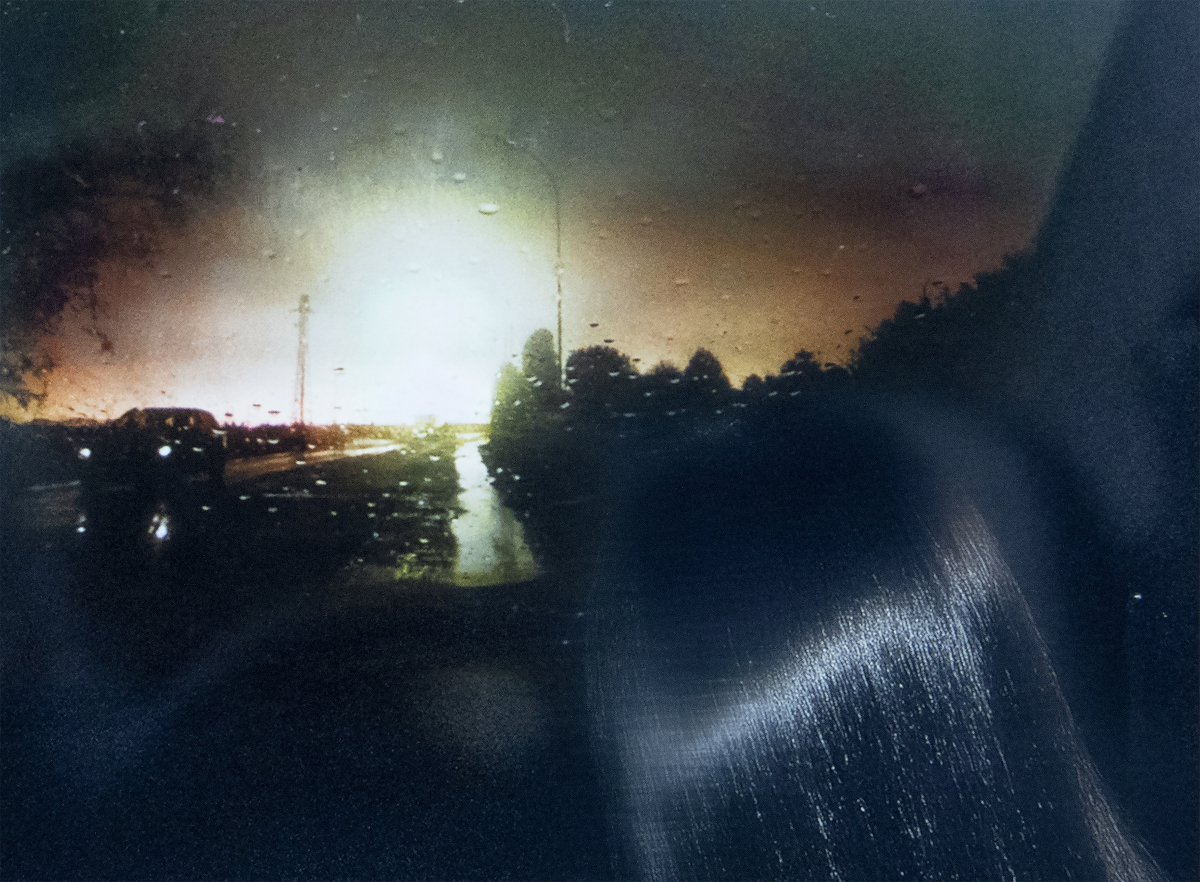
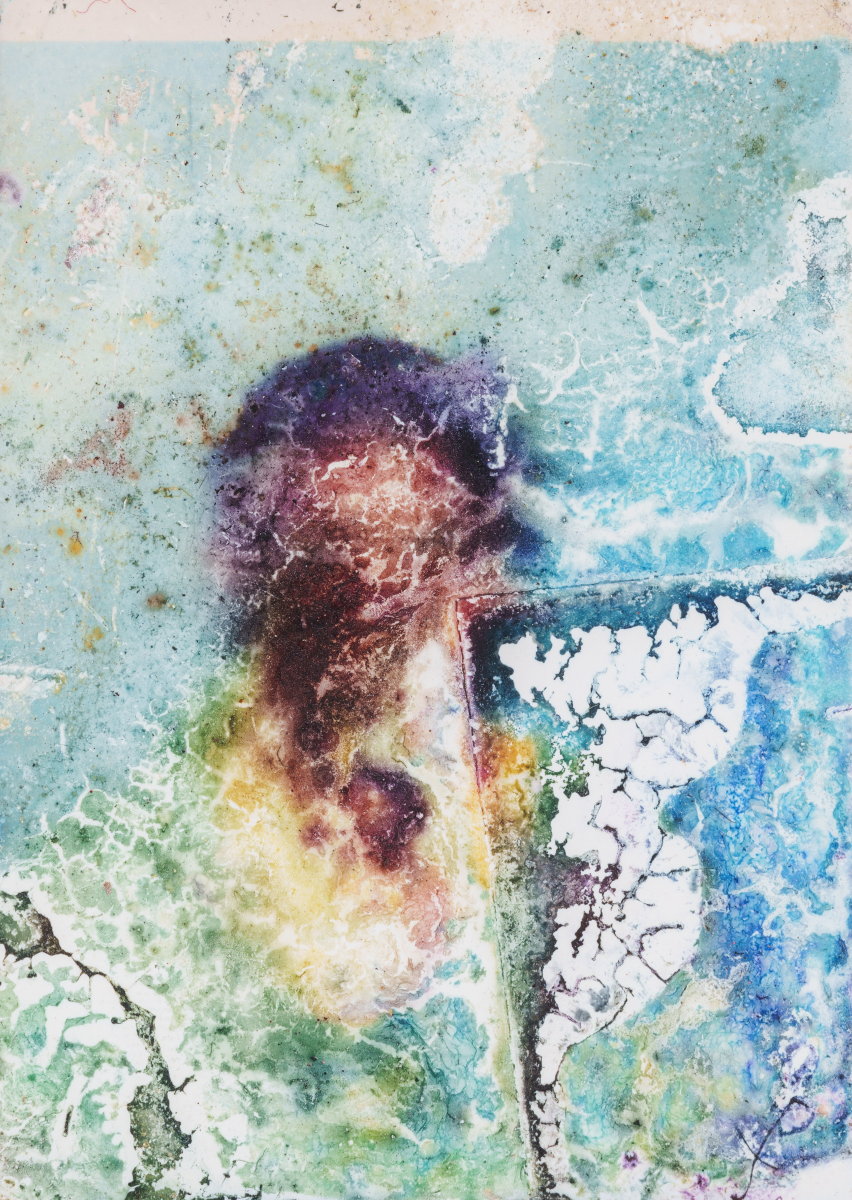
“Green Paradox” by Alice Jankovic (Genoa, 1996) is dedicated to Scheele’s Green, an eighteenth-century pigment of extraordinary brilliance but intrinsically toxic in nature, which becomes the focus of a visual investigation that explores the paradox between aesthetic beauty and invisible danger. Through a chromatic archaeology that interweaves science, myth and ecology, the project reflects on what is not immediately visible such as hidden toxicity and the invisible impact of human action on the environment. The voice evoked is that of nature, fragile and resilient, which continues to manifest itself beyond the reassuring narratives of “green”.
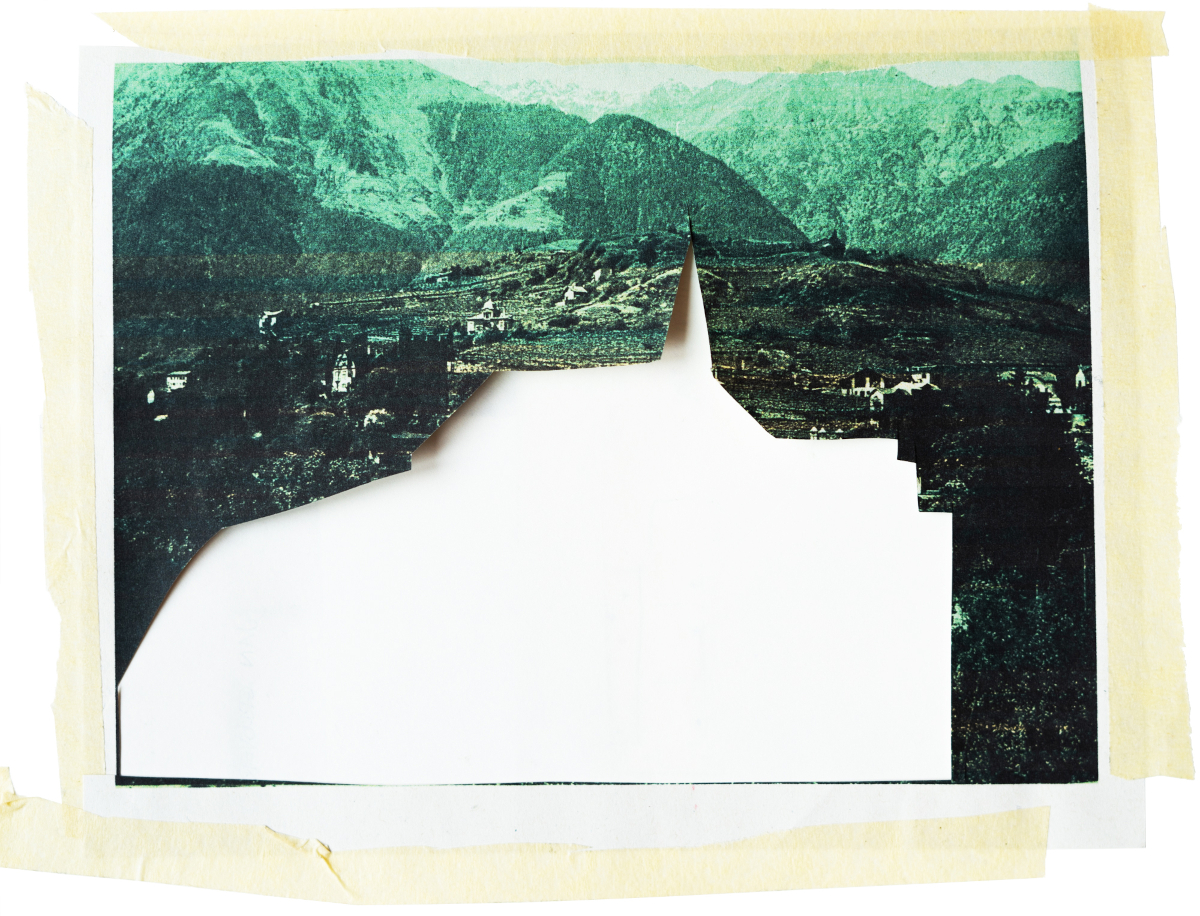
“Milk, Weight, Gravity” by Anie Maki (Vipiteno, 1998) reconstructs a family narrative that hides and reveals, at the same time, ancestral psychological patterns. It recounts mental and psychological dynamics that have been silenced for decades and reappeared like ghosts in the author’s life, as the family albums did: a chaos of voices, faces, stories to listen to, to learn about, to investigate. The core theme is the legend of genetic depression in the family, highlighted by a series of suicides. The project is an intimate stream of consciousness, an act of retroactive care, an awakening. Collages and photographs create a process of connection between generations, from the ancestors to the author – in search of an understanding and acceptance of the past that can shed new light on the present, but also on the future.
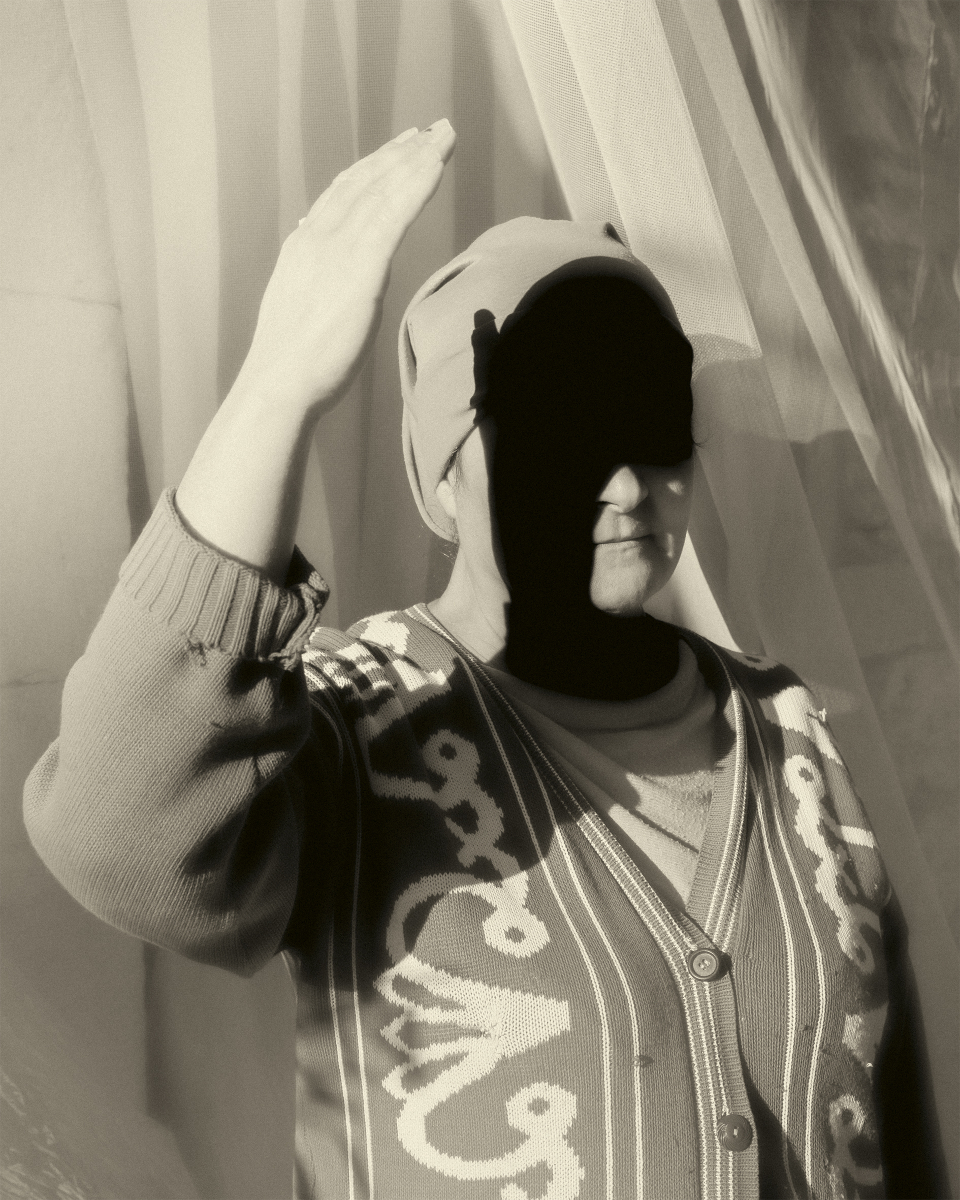
It is the voices of absence and mourning that cross “Finalmente posso andare” by Cinzia Laliscia (Terni, 1999), a project that whispers of a parallel and suspended inner world where farewells remain unexpressed. In 2020, at the height of the pandemic, the artist suffered two family bereavements, and the impossibility of a final farewell led her to take refuge in the nature and landscape of childhood, wild and familiar, to compose a visual diary of memory. Photography here becomes a place of dialogue with those who are no longer with us, evoking an intimate dimension in which memory and consolation coexist.
With “Una storia italiana”, Eva Rivas Bao (Milan, 2001) addresses the theme of the voice in a political and media key, questioning the missing images and manipulated narratives of the Berlusconi era. The trial that saw former Prime Minister Silvio Berlusconi under investigation is reworked by the artist starting from the figure of the model Imane Fadil, who died prematurely. “Una storia italiana” works on the “debris” of an imaginary public built as an image empire, questioning what remains when visual evidence is missing or removed. Starting from personal archives and documentary materials, also reworked with artificial intelligence, the artist recomposes a possible counter-narrative: “absent” images that reopen questions about power, representation, and collective memory.
“La Fortezza” by Federica Torrenti (Bologna, 1999) further expands the field by questioning consciousness itself as a territory to be crossed. By bringing together scientific, anatomical, and natural images, the project dissolves the idea of an isolated mind, proposing a relational vision in which humans and nonhumans co-generate. The voice evoked is that of a web of invisible connections that constitute us and that photography can make perceptible in a circularity that refers to an original relationship with the world.
“Archivio del mare” by Karim El Maktafi is an ongoing photographic project that investigates the memory of contemporary migrations in the Mediterranean through objects recovered after shipwrecks. The work stems from an attention to the people who cross the sea: men, women, and children who depart to protect their lives and seek a possible future, carrying with them only a few essential objects, charged with affective and symbolic value, the last traces of a life left behind. Through photography, these objects become silent presences, capable of restoring identity and dignity to the people who once owned them, beyond their absence. The sea emerges as a space of passage and memory, while the objects become tools of recognition and dignity.
“Archivio del mare” contributes to the construction of a visual memory of contemporary migrations, entrusting photography with the task of preserving and transmitting the stories of those who crossed the sea.
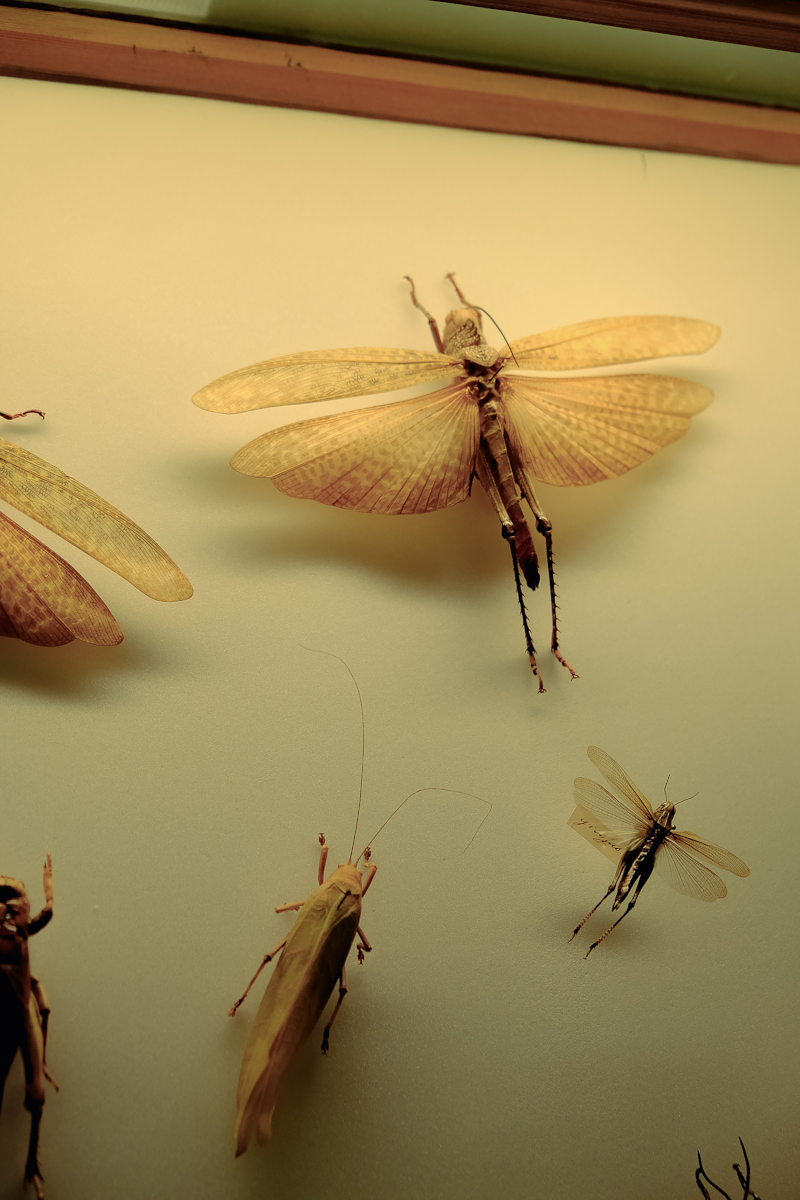
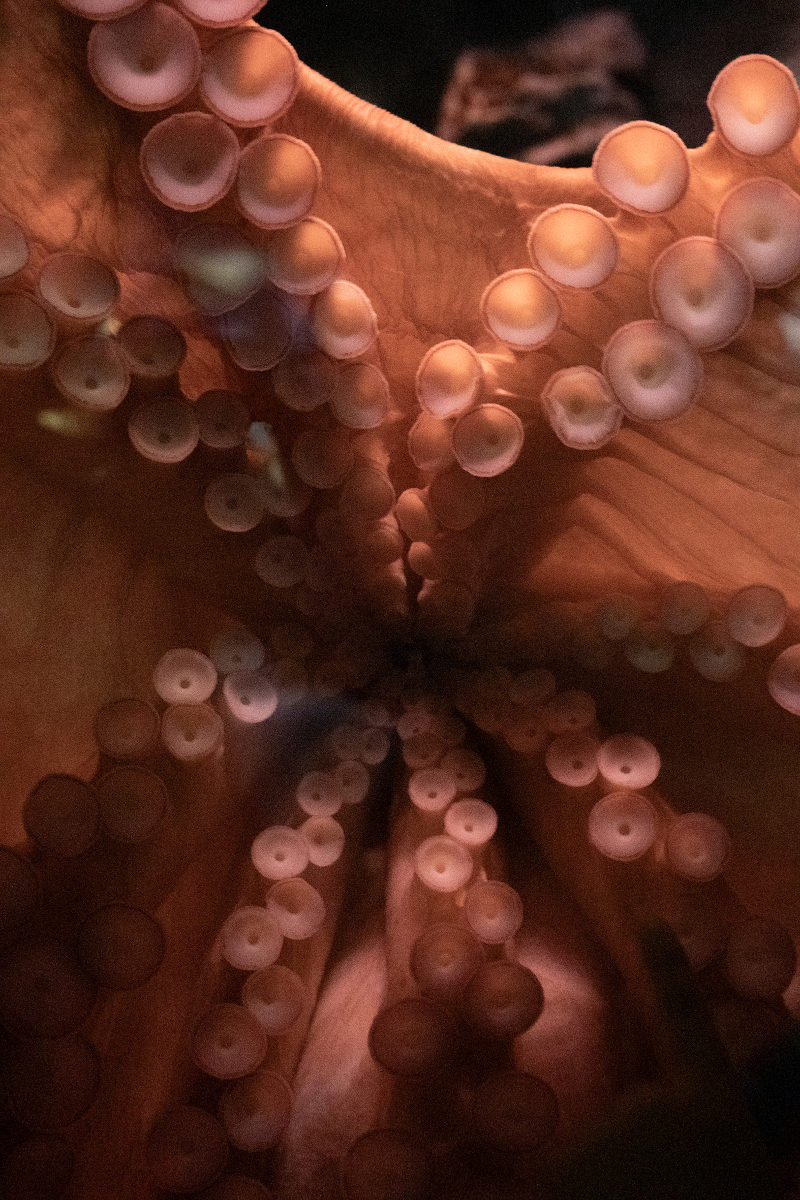
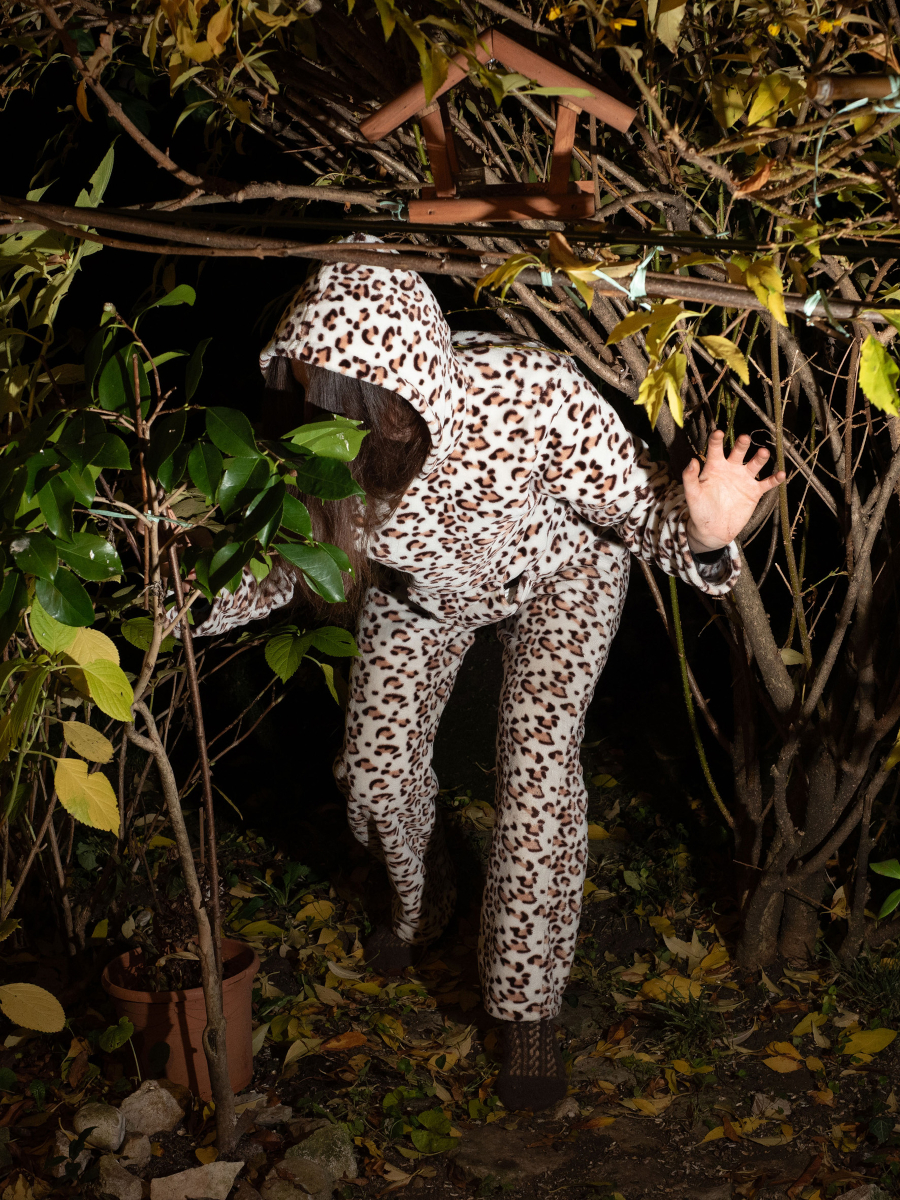
With “Quando torneremo a guardare le stelle”, Susanna De Vido (Conegliano, 1993) questions the representation of the living: while animals disappear from their habitats, they continue to “survive” in museums, scientific archives and family albums. These practices have constructed an imaginary of nature based on separation, control and appropriation. The project reflects on the relationships between humans and nonhumans in patriarchal Western societies in the Anthropocene era, often grounded in logics related to the separation, control, extraction, and appropriation of the living. An invitation to open a space for reflection to open up lateral perspectives and new possibilities for coexistence.