Ghostland

Ghostland


In our hyper-mediated age, reality increasingly seems to be a “spectral” place; a landscape in which experiences, bodies and events are filtered, translated and recoded through luminous surfaces, screens. Ghostland explores this intermediate space in which we live – a space in which the screen is no longer just a technical device, but a real cultural environment, capable of shaping our perceptions and behaviours, designing collective imaginations.

The visual technologies that inhabit our daily lives – surveillance systems, social interfaces, digital archives, artificial intelligence, flows of information from conflict zones – create a complex emotional geography, made up of apparent proximities and profound distances. Here, the face becomes a mirror, the body a manipulable surface, memory an archive constantly being rewritten, functional to imagining a dystopian future. War, disasters, the alteration of the self and a widespread sense of vulnerability require mediation with the aim of relieving pain and multiplying spectacle in the face of a world that is sometimes impossible to understand and hard to decode.

Thus, in this oversaturated visual landscape, the image acts both as a mirror and a barrier; it reflects desires, fears and aspirations, but also exposes us to forms of control and a progressive anaesthetisation of the gaze.

The screen becomes an ambiguous place where reality breaks down, recomposes and reinvents itself, producing hybrid identities, altered memories and narratives that oscillate between reality and fiction.

Ghostland offers a reflection on how we observe others and ourselves, how algorithms monitor us, how we construct a sense of danger and trust in a future yet to be built.

Through experimental artistic practices, the group exhibition invites us to become aware of this uninterrupted immersion in images and to make it visible. This is not about a dystopian future, but about our present in which we are not simply spectators, but an active part of this new reality.
Finally, an invitation to reflect not only on what we see – and produce – but above all on what remains outside the field: the blind spots, the omissions, the spaces where reality continues to escape and which appears only through the frame of the screen.

The projects by Indrė Šerpytytė and Visvaldas Morkevičius are part of the Cultura Lituana in Italia 2025–2026 programme, created by the Institute for Lithuanian Culture and the Embassy of the Republic of Lithuania to the Italian Republic.
ZOÉ AUBRY – FAIRE ÉCRANE
https://z-aubry.com/About

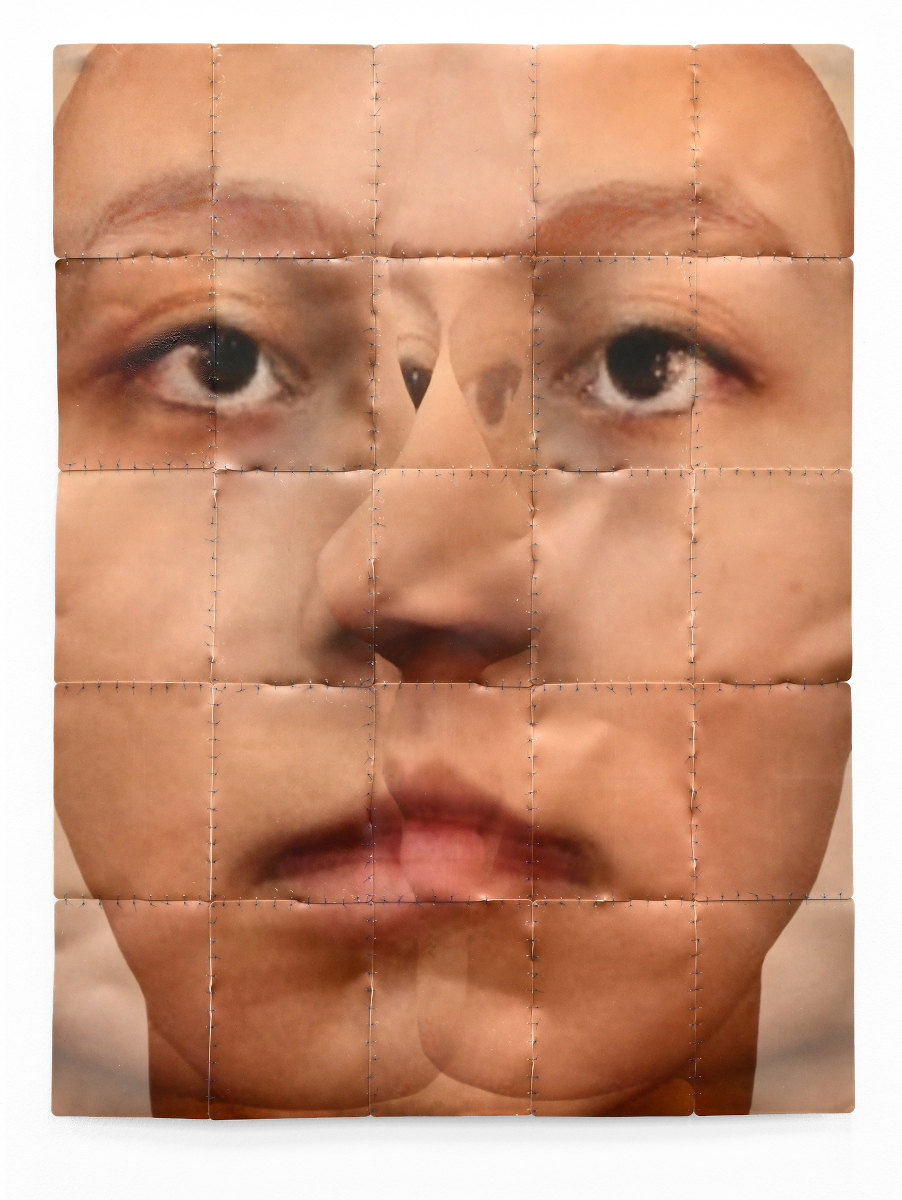
Faire écran offers a critical reflection on the construction of identity in the age of digital images, positioning the face as a sensitive surface and space for exposure. Through fragmentations and alterations, Aubry highlights the tension between the lived body and its representation. The face emerges as an interface, a place of mediation between self-perception and technological visibility. Visual discontinuities reveal the malleability and vulnerability of contemporary identity. Photography thus becomes a critical space for contesting the norms that shape appearance.

SARA BEZOVŠEK – SND
https://sarabezovsek.com/about

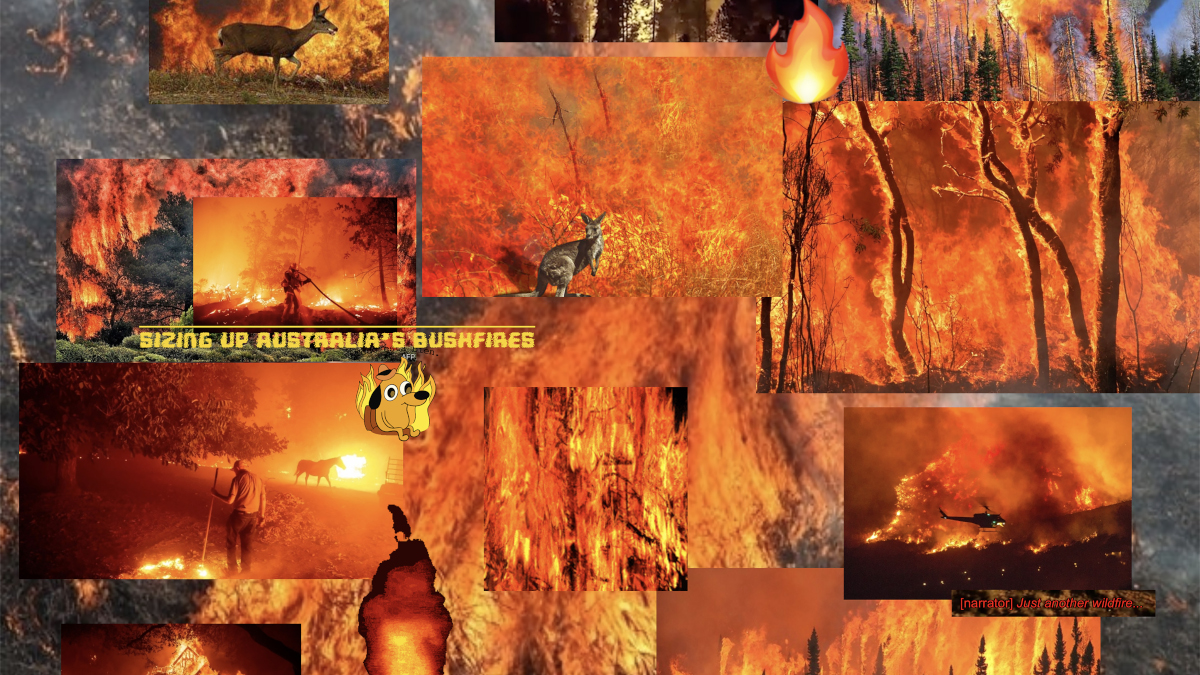
SND is an interactive digital project that explores the possible futures of humanity through a narrative path inspired by the Hollywood cinematic structure. By integrating visual materials found online and his own productions, the artist builds a visually saturated and ever-evolving environment. The viewer is invited to navigate autonomously between utopian and dystopian scenarios, becoming an active part of the experience. The work reflects the contemporary climate marked by anxiety, information overload and global uncertainty. A critical meditation emerges on the relationship between collective imagination, technology and the destiny of the planet.

CAROLYNE DRAKE – NEXT DOOR
https://carolyndrake.com/contact

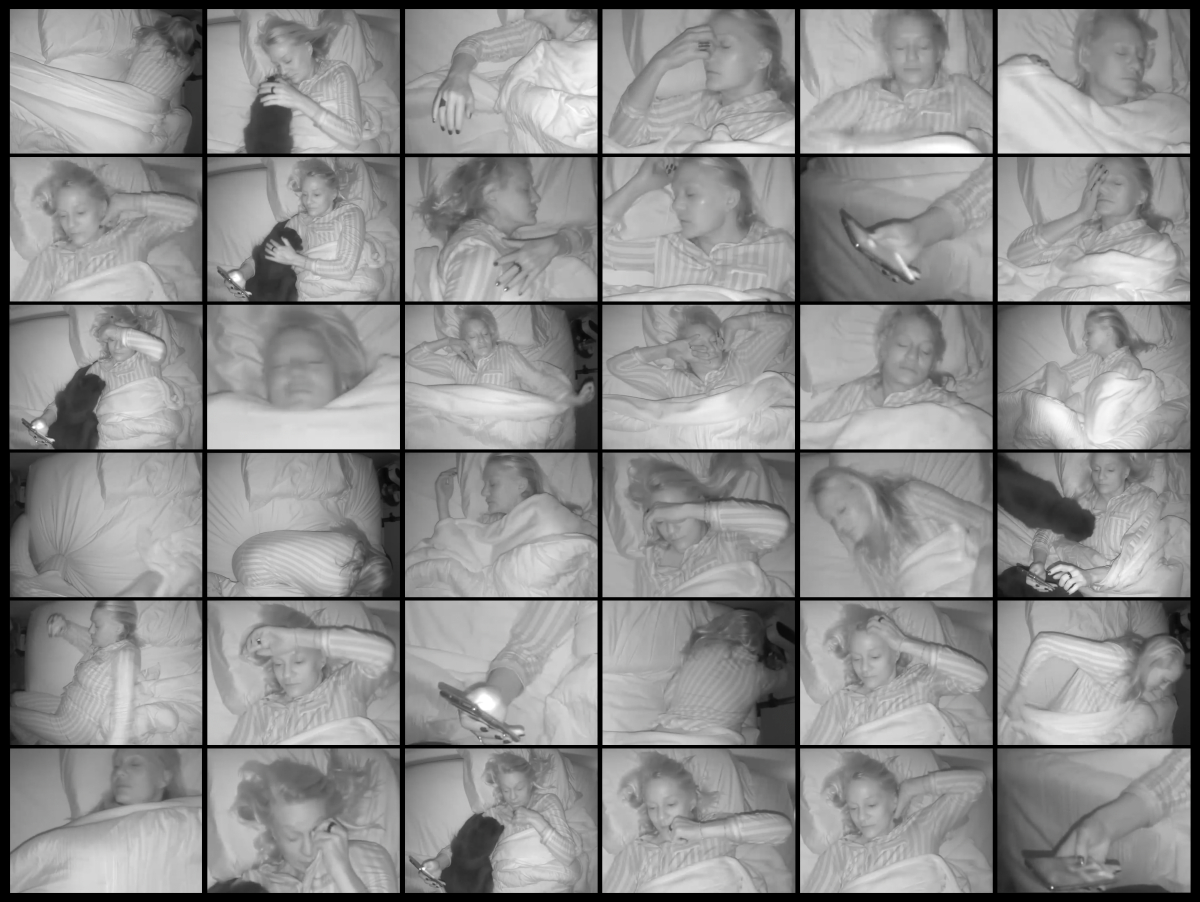
Sleepers critically investigates the dynamics of surveillance and the social construction of fear in domestic and urban spaces. The artist redirects the cameras towards the intimacy of the bedroom, subverting their control function.

In parallel, Drake explores the nocturnal urban space, the color photos presented next to them were taken after sunset, with a camera mounted on a tripod. In doing so, the artist exposed himself to the perceived dangers cited in Next Door posts and simultaneously became one of those dangerous subjects.

ALISA MARTYNOVA – ANIMA
https://www.alisamartynova.com/about

Anima explores contemporary identity at the intersection of human and artificial, where the boundaries between organic and synthetic dissolve. Through a process of co-creation with artificial intelligence, the artist reactivates visual archives by generating hybrid portraits and fluid identities. Cyberspace is conceived as a dream space, in which the machine becomes an imaginative extension of the human. Fragmented faces reflect a post-binomial and ever-changing condition. The work is configured as a critical reflection on the co-evolution between body and technology.

VISVALDAS MORKEVICIUS – CAMOUFLAGE
https://visvaldas.com/info

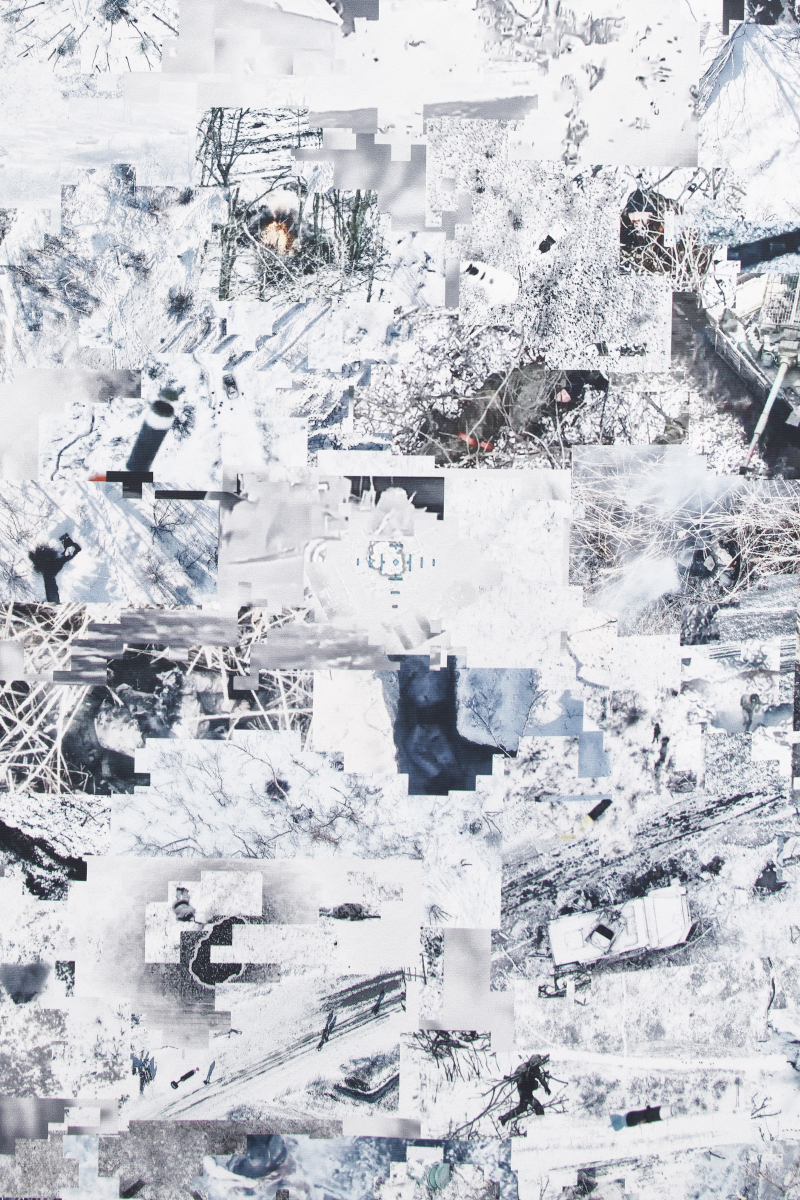
The project investigates the ethical and psychological effects of drone warfare, highlighting how technology distances us from the human reality of violence. Drawing on Grégoire Chamayou’s Theory of the Drone, it shows how drones turn killing into a mediated, abstract act, removing personal risk and empathy. The installation employs digital camouflage and drone footage from the war in Ukraine. It contrasts destruction with emotional detachment. Viewers are invited to adopt the drone’s perspective while concealed under the camouflage.

MYKOLA RIDNYI – BLIND SPOT
https://www.mykolaridnyi.com/biography 

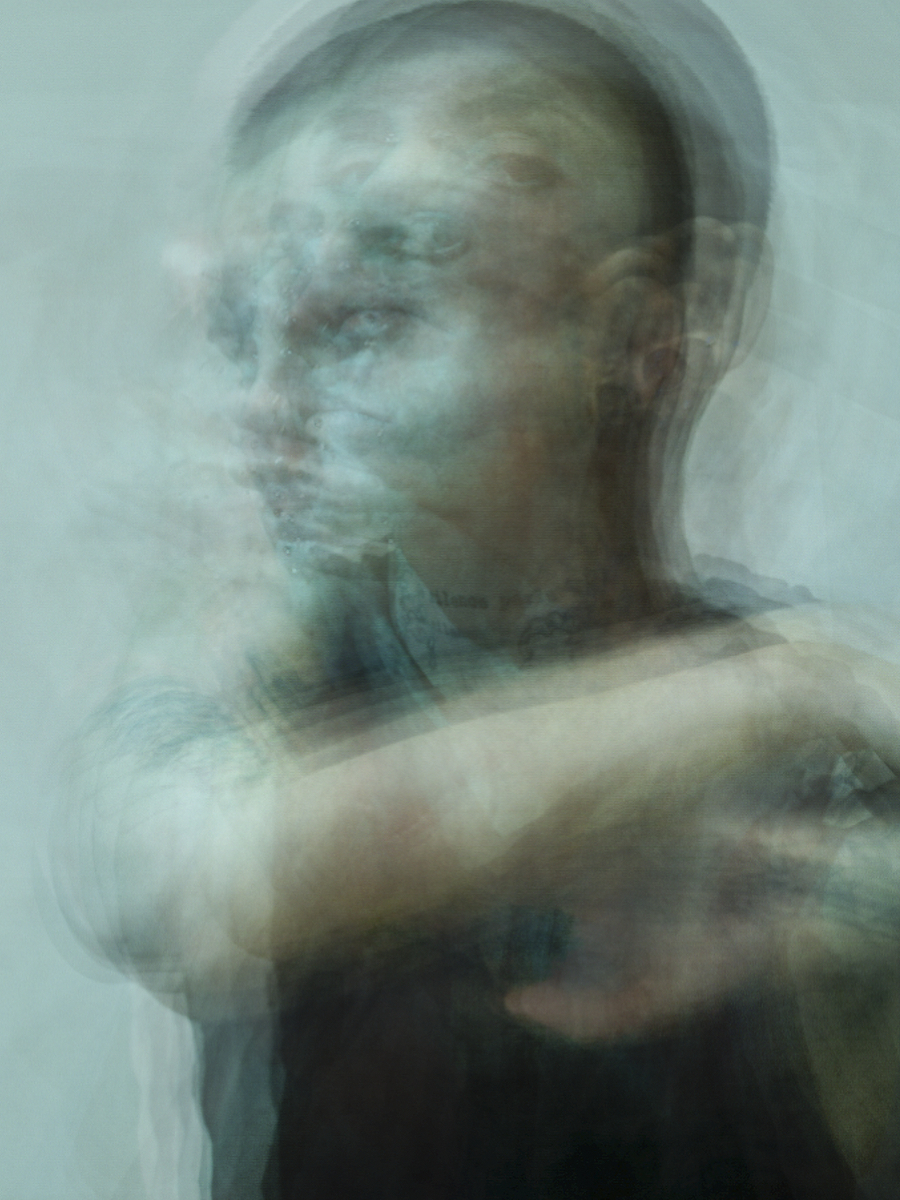
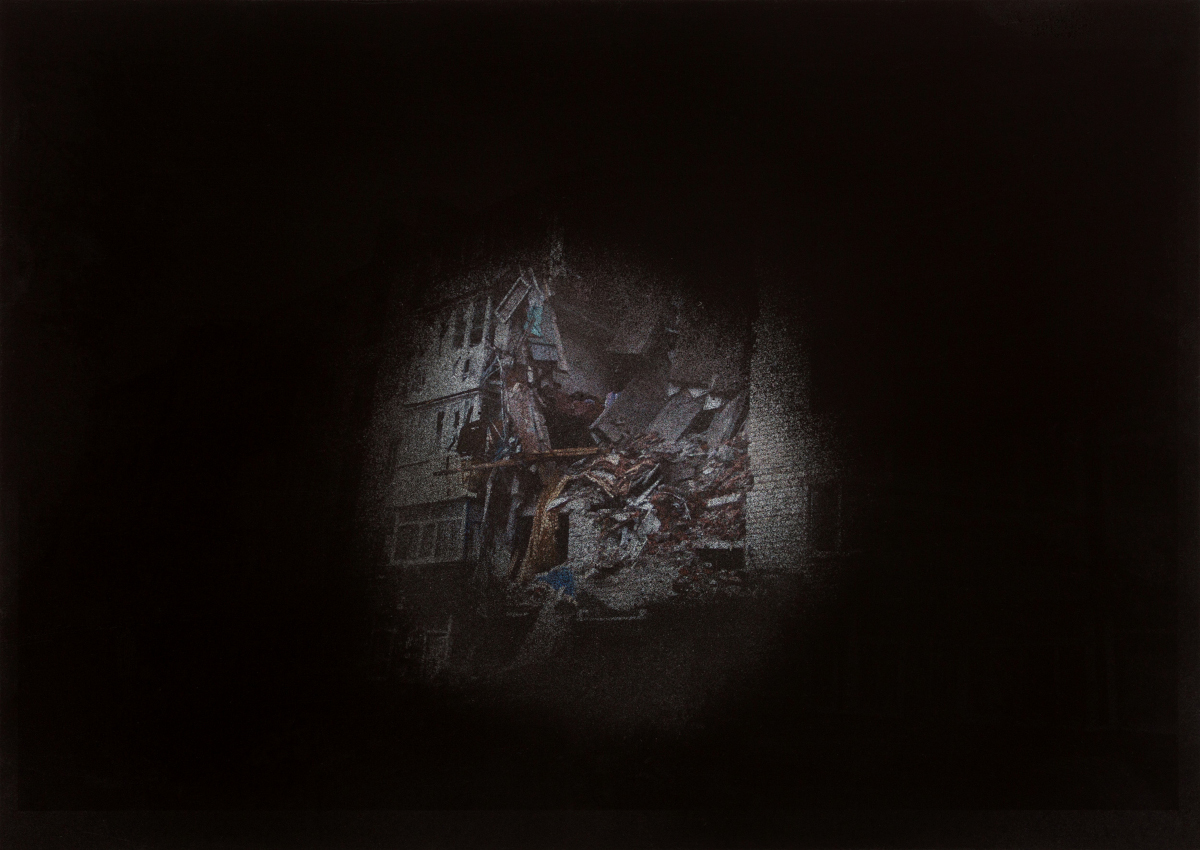
Blind Spot uses the ophthalmological notion of “blind spot” as a metaphor for contemporary perception in the state of media warfare. Intervening on images of devastated Ukrainian territories, the artist superimposes forms that evoke vision loss. This visual alteration reflects the mechanisms of propaganda, which obscure the understanding of political and social reality. The work questions the subjective construction of reality and the fragility of the gaze. A critical reflection emerges on the visibility, memory and representation of the conflict.

INDRĖ ŠERPYTYTĖ – THIS IS HOW WE WIN WARS
https://indre-serpytyte.com/About

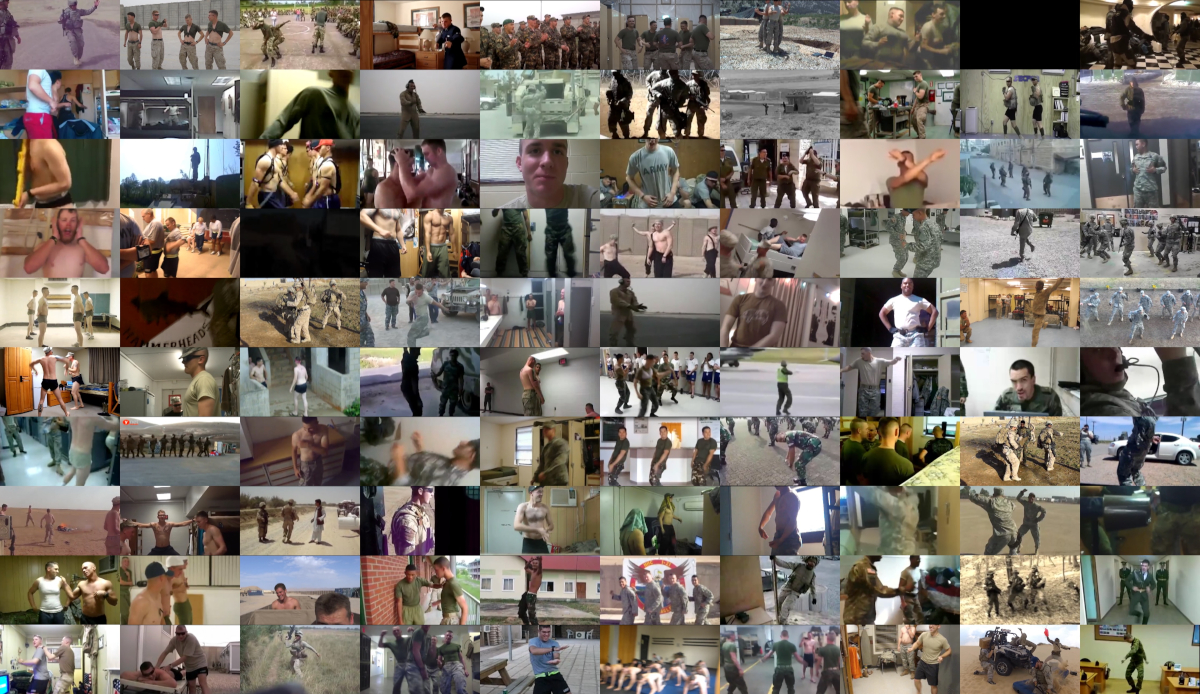
The work reflects on the relationship between ritual, war and trauma, investigating the emotions and silent bonds that run through the military apparatus, in contrast to explicit rites and systems. It examines the various ways in which trauma is addressed, processed, and expressed at both the intimate and public levels, and investigates the complex and often problematic relationship between these modes of grieving and remembering.

VASTE PROGRAMME – IT’S ALL FUN AND GAMES
https://vasteprogramme.com/?page_id=166

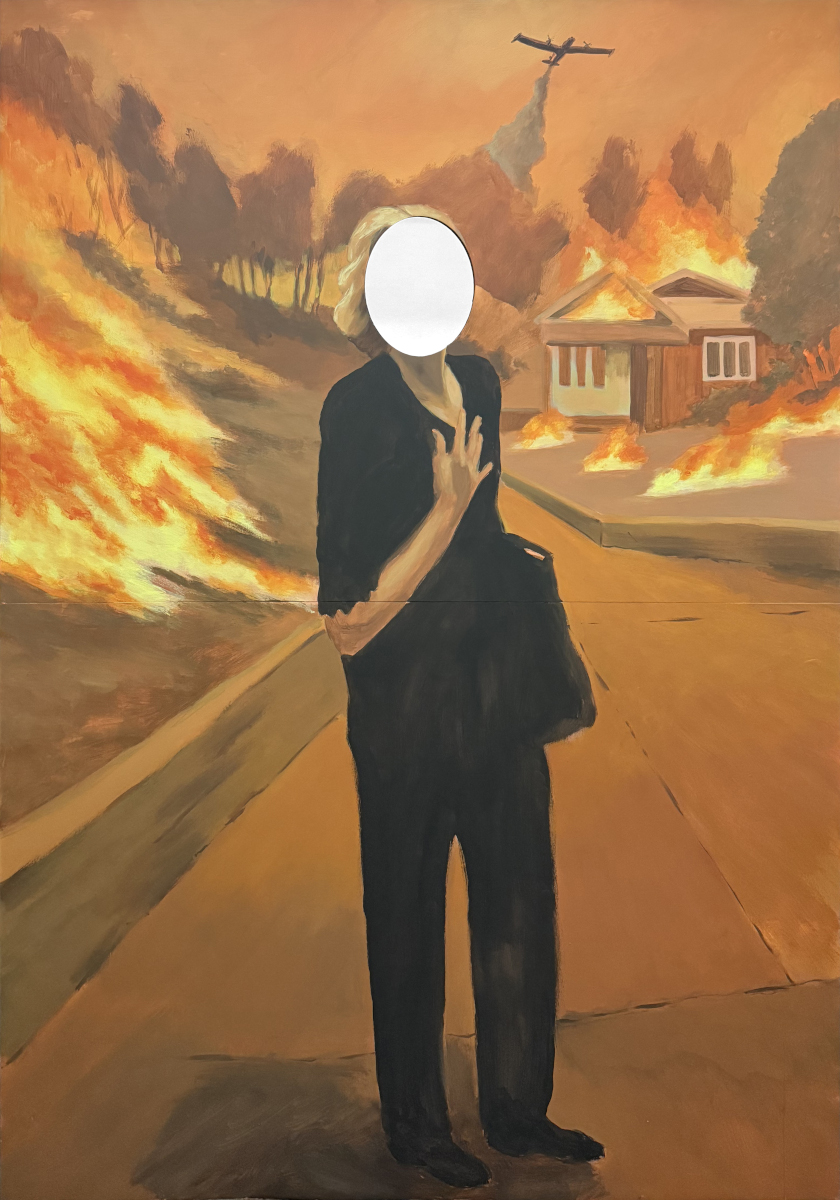
The series reworks peepboards into tools for reflecting on climate catastrophes. The pierced faces allow the viewer to temporarily replace people on the run, suspending the boundary between game and reality. The images, constructed from hand-painted photographic collages, document extreme and media-filtered climate phenomena. The installation, with the panels initially shown from behind, generates curiosity and discomfort. The work invites us to confront the urgency and proximity of environmental disasters in everyday life.


exhibition venue

Palazzo Da Mosto
via Mari, 7
Reggio Emilia

opening hours

30th April – 14th June

opening days
30th April › 19-23
1st May › 10-23
2nd May › 10-23
3rd May › 10-20

from 7th of May to 14th of  June
Thursday  › 10-13 e 15-20
Friday – sabato – domenica › 10-20
special openings 
1st e 2nd of June > 10-20

Condividi questa mostra!